Cléo from 5 to 7
1962
Lauren Kicinski
Scroll for Snack Bar menu!
Story
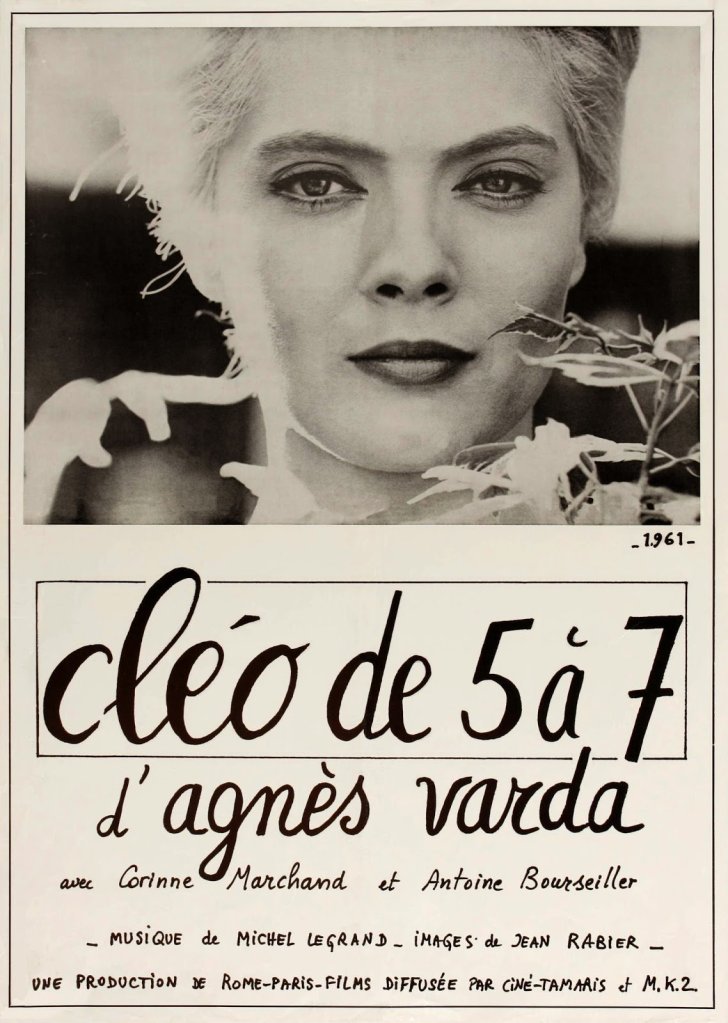
Chronicling the two hours singer Cléo (Corinne Marchand) has to wait for biopsy results, we are taken on a Day in the Life in 1960s Paris, France. From a colorful and ominous tarot card reading, to a run in with a sad song, to travelling around Paris with a friend, and to finally meeting someone worth spending time with, Cléo shows us what real character progression looks like. A pillar of French New Wave, Cléo from 5 to 7 is a film every cinephile should see, at least once.
My Thoughts
When I first hit play on Cléo from 5 to 7, I was instantly captivated by its unique camerawork. While my high school level French 1 is rusty, and I had to rely on subtitles, the story being in French just made perfect sense. There is something captivating about watching a film for how it is filmed and watching as a character visually progresses, then watching for the story of the film. As it was not my first French film rodeo (Beau Travail by Claire Denis holds that spot), I was familiar with the need to keep an eye on both the captions and the screen to get the best sense of the film – of course, it would be best to be able to speak the language, but one step at a time.
Starting from the top, I loved the tarot card opening scene. The cards being in color was an interesting technique of showing how Cléo’s future is in a sort of limbo, while her world is set in black and white. Cléo’s reality is straightforward and together – she has her fame, money, lover – black and white; with the addition of her illness, her future is disrupted and her life upturned, and so the addition of the cards in color would represent the anxious, upset future. The cards also predict changes in her life, which we later see come true, such as with the death card as a transformation of her view on life and her acceptance of what is to come.
I went into the film without so much as reading the synopsis, so when the chapter titles came on screen every few minutes, I did not expect the film to really be a chronicle of the protagonist’s afternoon. However, I was pleasantly surprised that these did occur, as it was also a real timestamp of the film’s progression, too. The use of this made it feel less like I was watching a film happen, and more like I was taking part in it, following along with the parts of her day as they happened.
Back to the camerawork, I loved the filming of Cléo walking down the stairs out of the tarot reader’s apartment; the different shots of the same part reflected the sense of anxiety that Cléo feels and translates it into film.
One thing I found fascinating throughout the film was the fact that we can hear the character’s thoughts. The different perspectives we get build up the story and Cléo’s character, painting a better picture than just what we see. It also builds the other characters we meet, such as Angèle in the café and Dorothée in the art studio. We’re given a deeper insight into how the other characters view Cléo, in addition to how she views herself.
I found it interesting how real some scenes felt, like when she is hat shopping with Angèle. Cléo tosses a hat back to its rack and it falls, and so does the cigarette case when she is back in her apartment. The fluidity here makes it, again, feel like it is less of a film, and more of a “day in the life.”
While in her apartment, Cléo is visited by friends, one of which is a composer. I found this scene a great addition to the plot because of the way it helps build up her anxieties. Here, the composer has her sing a song about lost love and the loneliness that one feels. It’s perfect because Cléo takes it as another sign of her doom, when really, it can be more reflective of her vanity and the beauty that she feels is slipping away because of her illness, one of her recurring inner thoughts. What is interesting about this scene in general is that, while singing, she becomes the sole focus of the frame, isolated from her surroundings; the background becomes blacked out and the other people she is with disappear, reflecting the words of the song.
Later, when she decides to leave her apartment and walk around the city, it seems as though everyone is looking at her. This, again, plays into her self-consciousness and concern for how others are perceiving her. We do see though that really, no one in reality is paying all that much attention to her. Her illness and how it makes her look are her sole concerns at this point.
The scene following this one is Cléo meeting Dorothée at the art studio where she is modeling. Finding Dorothée in the nude, Cléo shares that she would never be able to do that because she would feel exposed to the view of others, whereas Dorothée says she is comfortable and happy in her skin. This is also where we hear Dorothée’s inner thoughts of how she thinks Cléo is beautiful, compared to Cléo’s own thoughts of doubt.
I found the silent film scene interesting. At first, I wasn’t sure what the point of including it was, as it seemed a little random. However, on further thought, I realized that the character in the short saw the worst because of the glasses – or perspective in Cléo’s case – he had on. This was absolutely necessary because it helped build up Cléo’s character arc later on where she learns to take everything one at a time and learns to accept what happens with a change in perspective.
I am a sucker for a good romance, and oh my gosh, this becomes a GOOD romance!! After she leaves Dorothée, Cléo asks the taxi driver to take her to a nearby park. She walks around for a while, and finds that as she continues she sees fewer people around… until she is approached by Antoine, a soldier on leave from the Algerian War (which we heard about earlier on the radio). He talks to her like a regular person and is definitely chatty – just like the tarot cards at the beginning tell her. I also really like how the chapter for this part says, “Cléo and Antoine!” Their talk about life and reality gives Cléo the attention and time to work through the feelings she needed. It also gave her the beginning of a relationship that is deeper than the one with her lover. This combination of scenes – from the park to the bus, to the hospital and garden – allows Cléo to accept her fate, which we discover is a positive for the cancer she feared but not serious, and allows her fear to leave and be replaced by a lighter happiness.
Overall, I definitely understand why it is such a highly recommended movie. The cinematography is so neat, and the story really allows the audience to grow with the character. I’m so glad I watched!
On the Snack Bar Menu
Click here for a snack that pairs perfectly with this one for your next movie night!
Mini Charcuterie Board and a Blackberry Cran Spritz Mocktail
This French New Wave classic is classy and chic – the snack must reflect this. I am obsessed with charcuterie boards, and the colorful elements go well with the black and white film. For the mocktail, the tart cranberry mixes perfectly with the sweet and tart flavor of the blackberry – and it all comes together with a bubbly Sprite.
Ingredients
Charcuterie Board (Tips)
Charcuterie boards can be customized any way you like! Here are some tips to make the perfect spread! I’m saying mini to make it as personal and single-serve as you want!
- Cheeses – have a few different kinds: a hard (like cheddar), a soft (cream cheese is a go-to for a spread, too), and an in-between (like monterey jack)
- Meats – think thinly sliced (like prosciutto, ham) or small (like pepperoni)
- Savory – nuts (like cashews, almonds), spreads (like hummus), cold veggies (like carrots)
- Sweet – fresh fruit (like apples, grapes, etc.), dried fruit (dried cranberries are a must), jam (strawberry is a go-to, so is raspberry, blackberry, etc.)
- Crackers! – something sturdy with a little flavor – I go with an entertainment mix: plain/buttery, whole grain, multigrain – variety is good!
- Notable mentions – something spicy (like hot honey), something baked (i typically include like a toasted ravioli to go along with the cold elements, but keep them seperate!!!), a desert (cookies like wafer cookie, shortbread cookies, and something chocolate-y)
Mocktail
- 1/2 cup cranberry juice
- 3 tbsp blackberry syrup
- 1/2 cup Sprite
- 1 maraschino cherry to garnish
Directions
- Grab your board: You don’t need anything excessive. A wooden cutting board, wide platter, or even a dinner plate will do.
- Put together your charcuterie board: Arrange your chosen board elements with cheese first, then meats, and fill in space with your colorful elements and jars of spreads.
- Make your mocktail: To a glass, add ice and the blackberry syrup. On top, add the cranberry juice and stir. Add Sprite on top, don’t stir.
- Garnish and Serve: Garnish the mocktail with a maraschino cherry, grab your charcuterie bits, and go watch the movie!
 Snack Bar Films